

What is balanced nutrition? The health-conscious woman's guide
Balanced nutrition is not about cutting carbs, surviving on salads, or obsessing over macros in a spreadsheet. It is a dynamic, science-backed balancing act between energy in and energy out, with a full cast of nutrients playing starring roles. Yet diet culture keeps selling you a much smaller, sadder story. If you have ever felt confused about what balanced nutrition actually means for your real, active, fabulous life, you are not alone. This guide breaks it all the way down so you can fuel your glow-up with intention, not guesswork.
Key Takeaways
| Point | Details |
|---|---|
| Core principles | Balanced nutrition centers on adequacy, balance, moderation, and diversity of nutrient intake. |
| Energy balance | Matching energy intake to your activity level supports optimal body function and weight management. |
| Nutrient density | Choosing nutrient-dense whole foods over processed items enhances health beyond calories alone. |
| MyPlate guidance | Visual plate models simplify building balanced, nutrient-rich meals for daily life. |
| Mindset shift | Seeing balanced nutrition as a luxe lifestyle of abundance fosters sustainable, empowering habits. |
Balanced nutrition basics: core principles and why they matter
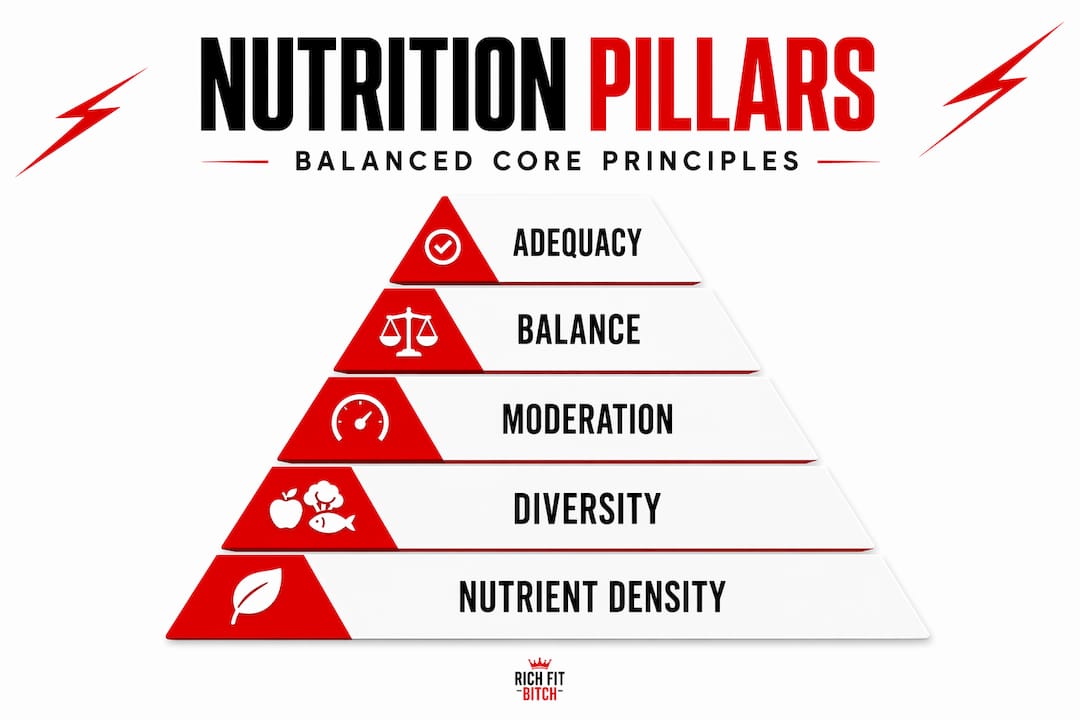
So, what is balanced nutrition at its core? Think of it as the foundation of your entire wellness empire. It is not a single rule. It is a framework built on four non-negotiable pillars.
According to WHO, a healthy diet rests on adequacy, balance, moderation, and diversity. Translation? Your body needs enough of everything, not too much of anything, and a wide variety of whole foods to thrive. That is the real definition of balanced nutrition.
“Balanced nutrition is not a diet. It is a lifestyle contract with your body, built on adequacy, moderation, diversity, and energy alignment. Honor it, and your body will show up for you every single day.”
Here is what each pillar actually looks like in practice:
- Adequacy: You are getting enough calories and nutrients to fuel your brain, muscles, hormones, and immune system without running on empty.
- Balance: Carbohydrates, proteins, and fats each show up in the right proportions. No one macro gets ghosted.
- Moderation: You are not overdoing sugar, sodium, or saturated fat. You enjoy things without going off the rails.
- Diversity: You eat across the full color spectrum, getting vitamins, minerals, and phytochemicals your body cannot manufacture on its own.
The importance of nutrition goes beyond aesthetics, babe. Chronic disease risk drops significantly when these four pillars are consistently respected. Think type 2 diabetes, cardiovascular disease, and even certain cancers. Your food choices today are investments in the woman you are becoming.
Now that you know what balanced nutrition fundamentally means, let’s dive deeper into how modern dietary guidelines translate these principles into practical food choices.
Modern dietary patterns and the role of nutrient density
Here is where the macro obsession myth starts to crack. Counting calories and hitting precise macro splits does not automatically mean you are nourishing your body. Nutrient density is the real queen of the conversation.
The 2025 to 2030 Dietary Guidelines emphasize eating more vegetables, fruits, whole grains, nuts, fish, and vegetable oils while limiting processed meats, added sugars, refined grains, and saturated fats. That shift from “how many calories” to “how much goodness per bite” is everything.

Nutrient-dense foods deliver vitamins, minerals, fiber, and health-promoting compounds with minimal added sugar or sodium. Think salmon, spinach, lentils, blueberries, almonds, and quinoa. These foods are doing the heavy lifting for your energy, skin, recovery, and mood.
Here is a clear breakdown of what to prioritize and what to pull back on:
| Prioritize | Limit |
|---|---|
| Leafy greens and colorful vegetables | Processed meats (bacon, deli cuts) |
| Fresh and frozen fruits | Refined grains (white bread, pastries) |
| Whole grains (quinoa, oats, brown rice) | Added sugars (soda, candy, flavored yogurt) |
| Legumes and beans | Saturated fats (butter-heavy meals, fried foods) |
| Fatty fish and seafood | Sodium-heavy packaged snacks |
| Unsaturated fats (olive oil, avocado) | Alcohol in excess |
| Nuts and seeds | Ultra-processed convenience meals |
Explore holistic nutrition patterns to see how these food choices come together in real lifestyle routines. The goal is a pattern you can sustain and actually enjoy.
Pro Tip: When you are shopping, ask yourself: “Did this food exist 100 years ago?” If yes, it is probably working in your favor. Whole, minimally processed options almost always win on nutrient density.
Understanding the ideal food choices forms a great foundation. Next, let’s visualize balanced meals with a trusted model.
The MyPlate model: a practical blueprint for vibrant plates
Visual tools change behavior. That is why the USDA MyPlate model is one of the most powerful, under-appreciated tools in your nutrition toolkit. It takes the science and makes it stupidly simple to use at every meal.
MyPlate recommends fruits and vegetables to cover half your plate, whole grains to take up about one-quarter, and lean protein to fill the remaining quarter. Add a serving of dairy or a plant-based alternative on the side. Done. That is your balanced plate.
Here is how each section earns its place:
- Fruits and vegetables (50% of plate): Deliver antioxidants, fiber, and micronutrients. The variety and color here is your beauty and immunity insurance.
- Whole grains (25% of plate): Fuel sustained energy without the blood sugar crash that comes from refined carbs. Oats, brown rice, farro, and whole wheat pasta are all solid moves.
- Lean protein (25% of plate): Supports muscle repair, hormone production, and satiety. Chicken, fish, tofu, eggs, and legumes all count.
- Dairy or alternatives: Calcium, vitamin D, and potassium. Greek yogurt, almond milk (fortified), and cottage cheese work beautifully here.
| Plate section | Percentage | Food examples |
|---|---|---|
| Fruits and vegetables | 50% | Berries, kale, roasted sweet potato, cucumber |
| Whole grains | 25% | Quinoa, whole wheat bread, oats, brown rice |
| Lean protein | 25% | Salmon, eggs, lentils, grilled chicken, tofu |
| Dairy or alternatives | Side serving | Greek yogurt, fortified oat milk, cottage cheese |
Pro Tip: Your plate proportions are not written in stone. If you had a hard workout, shift more toward complex carbs and protein. On a rest day, load up the vegetable section. High-performance nutrition is about reading what your body needs, not following a rigid formula.
With your plate set, it is time to fine-tune the nuances of energy balance and macro distribution that keep your body thriving.
Energy balance and macros in your active lifestyle
Energy balance is not complicated in theory. Calories in versus calories out. But the nuance? That is where women who are actually living active, full lives need real guidance. Your energy needs shift constantly based on training intensity, stress, sleep, and hormonal cycles.
WHO defines balance as matching total energy intake with expenditure while maintaining adequate carbs, proteins, and fats across the day. And Cleveland Clinic frames nutrition as a balancing act across macronutrients, micronutrients, and hydration, all essential for optimal function. Both sources agree on one thing: no single macro gets to be the villain.
Here is how each macro plays its role for active women:
- Carbohydrates: Your primary fuel source. They power your workouts, feed your brain, and stabilize your mood. Complex carbs are your best friends.
- Proteins: The rebuilders. After a training session, protein repairs muscle tissue, supports hormone synthesis, and keeps hunger in check.
- Fats: The underestimated hero. Healthy fats support estrogen production, brain function, joint health, and the absorption of fat-soluble vitamins A, D, E, and K.
- Micronutrients and water: Iron, magnesium, zinc, vitamin C, and hydration keep your metabolism running and your skin glowing. Neglect these and you will feel it fast.
Use these steps to tune your nutrition as your activity shifts:
- Track your energy output for one week. Note which days involve hard training, which are active recovery, and which are rest days.
- Adjust carb intake accordingly. Higher-intensity days call for more complex carbohydrates pre and post workout.
- Keep protein consistent. Aim for adequate protein daily regardless of training volume. Your muscles need it for recovery even on rest days.
- Stay hydrated. Thirst is a lagging indicator. Drink water consistently throughout the day, and add electrolytes after intense sessions.
- Reassess monthly. Your body changes. Your nutrition should evolve with it, especially across hormonal cycles.
Pro Tip: Skip the extreme detox trends that strip your body of nutrients. Check out the protein and macros guide for science-backed guidance that actually works for active women. And explore elevated nutrition concepts to deepen your understanding of how macros fit into a holistic lifestyle.
Knowing how energy and macros play together sets you up to unlock next-level holistic nutrition strategies daily.
Elevating balanced nutrition for holistic wellness and empowerment
Here is the truth nobody talks about. Balanced nutrition is not just a physical strategy. It is a mental, emotional, and even financial power move. This is the Wealthness equation in action.
Nutritional adequacy and balance support physical fitness, mental clarity, and overall wealthness. Omega-3s feed your brain and stabilize mood. Iron prevents fatigue and brain fog. Antioxidants protect skin cells from oxidative stress, which means your glow is literally on your plate.
Financially, investing in whole, nutrient-dense foods beats paying for quick-fix diet products that drain your wallet and your energy. The long-term return on real food is exponential. Your top wellness essentials should always include ingredients that serve your mind, body, and future.
Here are the luxurious self-care nutrition habits worth building into your daily ritual:
- Start your morning with a high-protein, fiber-rich breakfast. Set the tone for your energy all day.
- Keep a variety of colorful fruits and vegetables stocked at all times. Make healthy the easy choice.
- Prep one batch of whole grains weekly. Quinoa, farro, or brown rice ready to go is main character energy.
- Hydrate with intention. Infused water, herbal teas, and electrolyte drinks count as self-care.
- Honor your cravings with upgraded versions. Dark chocolate, nut butter, and fresh fruit are indulgent and nourishing.
- Eat without screens at least once a day. Mindful eating improves digestion and your relationship with food.
The biggest mindset shift? Moving from restriction to abundance. You are not cutting things out. You are crowding in the good stuff until the less-supportive choices naturally take a back seat.
Why balanced nutrition is not about deprivation but refined abundance
Let’s get real for a second. The diet industry has profited enormously from making you believe that eating well means suffering. Cut this. Restrict that. Earn your food. That narrative is not just exhausting. It is damaging.
Balanced nutrition, when you truly understand it, is an act of self-respect and indulgence. You are giving your body the exact tools it needs to perform, glow, and feel incredible. That is abundance, babe. Not scarcity.
The deprivation mindset wrecks your relationship with food, spikes cortisol, and ironically makes it harder to maintain a healthy weight. When you approach eating from a place of “what can I add that will nourish me?” everything changes. Your choices become empowered, not punished.
Variety is built into the definition of balanced nutrition for a reason. Your body thrives on a rotating cast of flavors, textures, and nutrients. Eating the same six foods every week is not discipline. It is a missed opportunity for both pleasure and nutrition.
Explore a fresh take on holistic nutrition perspective to see how embracing diversity in your eating patterns creates the sustainable results that restriction never could.
Pro Tip: Reframe food as your ally. It energizes your workouts, sharpens your mind, enhances your beauty, and fuels the ambition you bring to every area of your life. That is not something you restrict. That is something you celebrate.
Balanced nutrition is a lifelong, evolving relationship. It flexes with your season of life, your goals, your hormones, and yes, your social calendar. Give yourself permission to honor cravings thoughtfully, enjoy meals fully, and manifest a food life that feels as rich as the rest of your world.
Elevate your nutrition lifestyle with Rich Fit Bitch essentials
You have the knowledge. Now let’s match it with the tools, babes. Rich Fit Bitch was built for women who refuse to settle, and that includes what goes into your body and how you show up in the world. Our nutrition collection is curated with premium, female-focused essentials that complement everything you just learned about balanced, nutrient-dense eating. Whether you are upgrading your supplements, building your protein game, or stocking your kitchen with intention, we have you covered. Pair your nutrition glow-up with our apparel that moves with your active life and accessories that remind you every day that you are that girl. This is the full lifestyle, elevated.
Frequently asked questions
What does balanced nutrition really mean?
Balanced nutrition means matching your energy intake with how much you burn, while eating a variety of nutrient-rich foods that adequately supply carbs, protein, fats, vitamins, and minerals. WHO defines this framework around adequacy, balance, moderation, and diversity.
How can I apply MyPlate to my daily meals?
Fill half your plate with fruits and vegetables, one-quarter with whole grains, and one-quarter with lean proteins, and add dairy or a plant-based alternative as desired. MyPlate guidelines make this a visual habit you can build in minutes.
Why is nutrient density more important than calorie counting?
Nutrient-dense foods supply essential vitamins, minerals, and health-promoting compounds with minimal added sugars or unhealthy fats, supporting lasting wellness that calorie counting alone cannot deliver. The 2025 to 2030 Dietary Guidelines make nutrient density the central organizing principle of healthy eating.
How do active women adjust their nutrition for workouts?
Active women balance nutrition by adjusting calorie intake and prioritizing enough carbohydrates and protein to meet shifting energy demands and support recovery. WHO guidance supports aligning intake with expenditure rather than applying extreme restrictions.
Can balanced nutrition help improve mental clarity and beauty?
Yes. Balanced nutrition supports brain function, mood stabilization, and skin health by delivering the essential nutrients your body and mind need to function at their best. Adequate nutritional balance is directly tied to physical, mental, and beauty-related wellbeing as part of holistic health.