

How protein powers your diet: a woman's guide to optimal health
You’ve seen the gym girls flexing their chicken and rice. You’ve heard that you need “more protein” roughly a thousand times. But here’s the thing nobody’s telling you: protein for women is way more nuanced than just slamming another shake. How much, from where, and when you eat it actually changes your results. This guide cuts through the noise and gives you the real, evidence-backed framework for using protein to fuel your body, your glow-up, and your goals.
Key Takeaways
| Point | Details |
|---|---|
| Protein is essential | It repairs tissues, builds muscle, and is crucial for daily energy and wellness. |
| Daily intake matters | Aim for 10%–35% of calories, or up to 1.6–2.2g/kg bodyweight if active. |
| Source quality counts | Plant-based proteins support heart health and should be included regularly. |
| Timing boosts results | Even distribution of protein through the day optimizes muscle and recovery. |
| Balance over excess | More isn’t always better—personalize your intake and seek medical advice if you have health concerns. |
Why your body needs protein: the foundation explained
Let’s get one thing straight, babe. Protein isn’t just a gym girl obsession. It’s the literal scaffolding your body runs on. Every cell, tissue, and system depends on it.
Dietary protein provides essential amino acids your body uses to build and repair tissues, power enzymes, and support normal body functions. That means your muscles, yes, but also your skin, hair, nails, hormones, and immune system. Protein is literally everywhere.
Here’s what protein actually does for you on the daily:
- Repairs muscle tissue after workouts so you come back stronger
- Supports collagen production for skin elasticity and that lit-from-within glow
- Fuels enzymes and hormones including insulin, thyroid hormones, and neurotransmitters
- Keeps you full longer by stabilizing blood sugar and reducing cravings
- Boosts immunity through antibodies and immune proteins
- Powers hair and nail growth because your keratin is literally made of protein
Protein is made up of amino acids. Some your body can produce on its own. Others, called essential amino acids, must come from food. And no, you don’t need every single one at every single meal. Your body maintains amino acid pools throughout the day, drawing from them as needed. So stop stressing about “complete proteins” at breakfast, lunch, and dinner. Focus on total daily variety instead.
“Protein is the body’s most versatile macronutrient. It’s not just about gains. It’s about every function that makes you feel like yourself.”
Understanding why nutrition matters goes deeper than macros on a spreadsheet. When your protein intake is dialed in, you recover faster, sleep better, and honestly just look better. This is your foundation, queen. Let’s build on it.
How much protein do you really need? Guidelines and daily targets
Okay, so protein is essential. Cool. But how much are we actually talking? This is where most women either massively undereat or fall for the “eat 200 grams a day” bro-science trap. Neither extreme serves you.
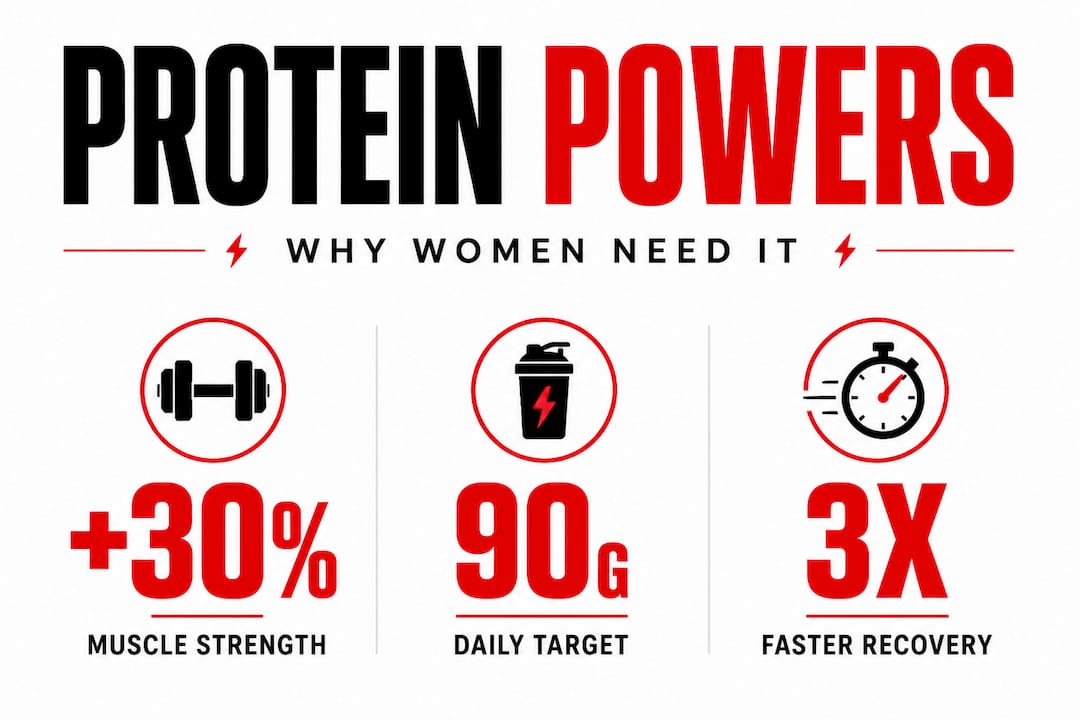
For general health, recommended protein intake for healthy adults typically falls between 10% and 35% of total daily calories. On a 2,000-calorie day, that’s roughly 50g to 175g. That’s a wide range, and where you land depends on your activity level, body composition goals, and life stage.
For active women chasing real fitness outcomes, sports-nutrition guidance for women recommends 1.4 to 1.6 grams of protein per kilogram of bodyweight daily, with intakes potentially reaching up to 2.2g/kg during heavy training phases or when you’re in a caloric deficit. This is your range, babe. Not some random number off a meme.
Here’s a quick breakdown to make it real:
| Goal | Recommended intake | Example (65kg woman) |
|---|---|---|
| General health | 0.8g/kg/day | ~52g/day |
| Active lifestyle | 1.2–1.4g/kg/day | ~78–91g/day |
| Muscle building | 1.4–1.6g/kg/day | ~91–104g/day |
| Heavy training or dieting | Up to 2.2g/kg/day | ~143g/day |
Breaking down what those numbers actually look like on your plate:
- 52g protein day: 2 eggs + Greek yogurt + a chicken breast
- 100g protein day: Protein shake + cottage cheese + salmon + lentil soup
- 143g protein day: Multiple meals centered around high-protein foods all day
Key things to know about hitting your target:
- Body weight in pounds? Divide by 2.2 to get kilograms, then multiply by your target range
- Protein needs increase when you’re in a caloric deficit (dieting), even if activity stays the same
- Older women (35+) often need slightly more protein to counter natural muscle loss with age
If you want to level up your approach, explore wellness supplements for women and check out the nutrition essentials for women content for a fuller picture of your macro strategy.
Not all protein is equal: animal vs. plant sources and health impact
With daily targets in mind, the next step is choosing the best protein sources for both fitness and heart health. Because not all protein is created equal, babe, and your choices matter beyond just the gram count.
Here’s the real talk on sources:
| Protein source | Pros | Watch out for |
|---|---|---|
| Beans and lentils | High fiber, heart-healthy, anti-inflammatory | Lower in some essential amino acids alone |
| Nuts and seeds | Healthy fats, versatile, plant-powered | Calorie-dense, easy to overdo |
| Poultry and fish | Complete amino acid profile, lean options | Preparation method matters |
| Red and processed meat | Filling, iron-rich | Linked to increased chronic disease risk with high intake |
| Dairy and eggs | High bioavailability, affordable | May not suit all digestive types |
| Plant protein powders | Convenient, clean options available | Quality varies by brand |
Shifting toward plant-based protein from processed and red meat is associated with better cardiovascular health in observational research. That doesn’t mean you have to go full vegan. It means crowding your plate with more beans, lentils, nuts, and seeds is genuinely one of the smartest moves you can make for long-term health.
Easy swaps to boost your plant protein game:
- Swap ground beef in tacos for seasoned black beans or lentils
- Add chickpeas to salads instead of croutons
- Replace some flour in baking with almond meal for a protein boost
- Stir hemp seeds into smoothies or oatmeal (about 10g protein per 3 tablespoons)
- Choose edamame as a snack over chips or crackers
Pro Tip: You don’t have to choose plants OR animals. The most sustainable, satisfying approach for most women is a flexitarian mix. Prioritize plants most of the time, add quality animal proteins strategically. Balance is the vibe.
If you’re ready to make the shift, our plant-based protein option is a clean, elevated way to get those gains without the heaviness. It’s the upgrade your blender deserves.
Protein timing and distribution: making it work for your routine
Once you know which sources to choose, how and when you eat protein can also change your results. Spoiler alert: timing isn’t everything, but it’s definitely something.
Research consistently shows you should distribute protein intake evenly across meals every three to four hours throughout the day. Why? Because your muscles can only synthesize so much protein at once. Dumping 100g into one meal and barely eating protein the rest of the day leaves gains (and recovery) on the table.
Here’s a practical daily routine that works:
- Breakfast: 25-35g protein. Think Greek yogurt with hemp seeds, eggs with smoked salmon, or a protein smoothie. This sets your amino acid levels for the morning and keeps cravings in check.
- Lunch: 25-35g protein. Grilled chicken or tofu bowl, lentil salad, cottage cheese plate. Keep it satisfying and real.
- Pre or post workout snack: 15-25g protein. A protein bar, shake, or hard-boiled eggs. Timing it within two hours of your workout supports muscle repair.
- Dinner: 25-35g protein. Salmon with quinoa, turkey stir-fry, or a hearty bean and vegetable dish.
Pro Tip: If hitting protein targets feels overwhelming, start by adding one high-protein item to each meal instead of overhauling everything at once. Small consistent upgrades beat perfect-then-nothing every single time.
Now let’s address the myth that makes women panic every month. Current evidence does not support changing protein needs by menstrual phase as a reason to adjust your targets. Your menstrual cycle affects mood, energy, and cravings. But your actual daily protein requirement? Stays relatively consistent. Focus on your total daily intake and distribution instead of overcomplicating your cycle phases.
“The most powerful thing you can do is show up consistently for your nutrition. Your body keeps score, and it rewards the daily effort.”
Want support setting up a routine that actually sticks? Our guide to wellness goals for women will help you structure your whole wellness plan, not just protein.
How much is too much? Myths, risks, and who needs caution
Optimal protein means hitting the target, but what happens if you go over? Or if your situation is different? Let’s clear up the myths because there is a lot of noise out there.
Here’s the truth: hypothesized harms of high-protein diets have not been demonstrated with compelling evidence in otherwise healthy adults. Your kidneys are not going to spiral because you had an extra chicken breast. In healthy women with adequate hydration, upper-range protein intake appears safe.
That said, there are real situations where you should personalize your approach and possibly check with a healthcare provider:
- Chronic kidney disease (CKD): Protein metabolism puts load on the kidneys. If you have CKD or a family history, get individualized guidance before bumping your intake.
- Certain liver conditions: High protein can tax liver function in those with compromised health.
- Pregnancy and breastfeeding: Needs shift significantly. Get specific guidance from your OB or dietitian.
- Disordered eating history: Tracking macros intensely may not be the right approach for everyone.
“More protein is not always better. Optimal protein is the goal.”
Common myths worth busting:
- “High protein will make you bulky.” No, babe. Lifting with progressive overload builds muscle. Protein just supports repair.
- “You need a protein shake right after every workout or the gains disappear.” The so-called anabolic window is way more flexible than gym lore suggests.
- “Plant proteins don’t count as real protein.” Completely false. Well-planned plant-based diets absolutely meet protein needs.
- “More protein means automatic weight loss.” Protein supports satiety and muscle retention during a deficit, but calories still matter overall.
The real risk of overdoing protein? Crowding out fiber-rich carbs and healthy fats, adding unnecessary calorie load, or spending money on supplements your whole-food diet already covers. Balance and elevated nutrition principles keep you from going to extremes in either direction. And if you want to know which supplements actually move the needle, the guide to supplements for women’s fitness is a must-read.
Our perspective: why tailoring protein is the real superpower
Here’s our honest, unfiltered take after reviewing all the research and watching the wellness space do its thing. The biggest mistake women make with protein isn’t eating too little or too much. It’s outsourcing their protein strategy to someone else’s formula.
Social media is addicted to the “more is better” protein narrative. Influencers stack 200g days like it’s a personality trait. And while that might suit a 90kg competitive powerlifter in a cut, it has zero context for a 60kg woman who does yoga, walks daily, and wants to feel energized and lean. The numbers don’t transfer. The strategy doesn’t either.
What actually works is learning your own context. Your training type, your health history, your food preferences, your life stage. A 28-year-old training for her first half marathon has different needs than a 43-year-old navigating perimenopause. Both deserve a protein strategy that’s actually theirs.
The research on holistic nutrition in action makes this clear: the women who thrive long-term aren’t the ones following the strictest protocols. They’re the ones who’ve learned to listen to their bodies, adjust seasonally, and treat nutrition as a dynamic, evolving tool rather than a rigid rulebook.
True main character energy? Knowing your protein needs shift with your training cycle, your season of life, and your goals. And having the confidence to adjust without a fitness influencer telling you to. That’s the flex.
Ready to optimize your nutrition for your best self?
You now have the facts, the frameworks, and the mindset to make protein work for your life, not someone else’s Instagram. Now it’s time to put it into action. Browse our nutrition collection for curated, elevated options designed specifically for women who are serious about their wellness game. From clean protein sources to targeted formulas, everything is chosen with intention. If you’re ready to go deeper, our specialty supplements lineup gives you the edge on recovery, energy, and results. Because you deserve more than generic advice and grocery store basics. You deserve a whole ecosystem built to support your glow-up.
Frequently asked questions
Do I need protein at every meal to get all the amino acids I need?
No, you don’t need every amino acid at each meal. Your body maintains amino acid pools throughout the day, so total daily variety and intake is what matters most.
Is too much protein bad for my kidneys if I’m healthy?
No convincing evidence shows high protein harms healthy kidneys, but women with chronic kidney disease or other medical conditions should get personalized guidance from their doctor.
Should I eat more protein during certain phases of my menstrual cycle?
Current research does not support adjusting protein by cycle phase. Meeting your overall daily target and spreading it across meals is far more impactful for muscle and recovery.
What are the healthiest protein foods to include in my diet?
Minimally processed plant proteins including beans, lentils, and nuts are linked to lower cardiovascular risk and pair beautifully with quality animal proteins for a well-rounded plate.
How do I calculate my protein needs if I’m trying to build muscle or lose weight?
Active women typically need 1.4 to 1.6g/kg bodyweight daily, with sports nutrition recommendations allowing up to 2.2g/kg during heavy training phases or energy-restricted periods.