

Unlock high-performance nutrition: Elevate wellness and results
High-performance nutrition is not just for Olympic sprinters or professional soccer players. It is for you, babe. The same strategies that help elite athletes fuel hard, recover faster, and feel unstoppable can work beautifully in your everyday life, whether you are chasing a PR at the gym, juggling a demanding career, or simply trying to feel like the main character you absolutely are. Sports nutrition is a strategic approach targeting fueling, recovery, and adaptation, and every woman deserves access to it. This guide breaks it all down, no gatekeeping, no intimidation, just actionable, empowering knowledge.
Key Takeaways
| Point | Details |
|---|---|
| Strategic daily fueling | High-performance nutrition means intentionally matching your food intake with your body’s energy, recovery, and wellness needs for each day. |
| Women’s unique needs | Female physiology requires special attention to energy, nutrition timing, and hormonal influences for optimal results. |
| Personalization over perfection | Customizing your approach is more effective than following rigid, generic plans or trend diets. |
| Avoid under-fueling pitfalls | Not eating enough can harm both performance and overall health, so maintaining energy balance is non-negotiable. |
| Holistic performance wins | Nutrition supports not just activity but also recovery, sleep, and empowered mindful living. |
What is high-performance nutrition?
Let’s get clear on what we are actually talking about. High-performance nutrition is not a rigid meal plan or a punishing diet. It is a strategic, intentional approach to eating that prioritizes energy, recovery, and long-term adaptation. Think of it as upgrading your body’s operating system, not just patching it with a multivitamin and hoping for the best.
Good nutrition for athletes targets fueling, recovery, and adaptation with focused attention to calories, carbs, fluids, micronutrients, and protein. But here is the real tea: those same principles apply to any woman who wants to feel powerful, sharp, and resilient every single day.
“High-performance nutrition means fueling your body for both function and optimization.”
To make it stick, think of the 4Ps framework:
- Personalize: Your body is not the same as anyone else’s. Your nutrition should not be either.
- Periodize: Adjust what you eat based on what your life and body demand that day, week, or month.
- Prefuel: Set yourself up for success before activity, not just after.
- Prepare: Plan ahead so you are never at the mercy of whatever is in the vending machine.
Now, let’s bust a few myths while we are at it. Here is a quick comparison so you can see exactly where healthy eating ends and high-performance nutrition begins:
| Feature | Healthy eating | High-performance nutrition |
|---|---|---|
| Goal | General wellness | Optimized energy, recovery, adaptation |
| Approach | Balanced food choices | Strategic timing, macro targeting |
| Personalization | General guidelines | Individual assessment and adjustment |
| Flexibility | Moderate | High, periodized by phase and need |
| Micronutrient focus | Adequate intake | Performance-specific sufficiency |
Common misconceptions vs. actual best practices:
- Misconception: It is only for athletes. Reality: Any woman can apply these strategies for better energy and recovery.
- Misconception: It requires extreme restriction. Reality: It often means eating more, strategically.
- Misconception: Supplements are the core of it. Reality: Whole foods lead; wellness supplements for women play a smart supporting role.
- Misconception: One plan fits all. Reality: Personalization is the whole point.
You deserve a strategy built around your life, not someone else’s training camp.
Core nutrients and strategies for women
Now that you know the foundation, let’s talk about what actually goes on your plate and in your water bottle. Because women have unique physiological needs, and ignoring that is leaving serious performance gains on the table.

Women’s high-performance nutrition requires special attention to energy availability and menstrual cycle related physiology. That means your nutrition strategy should actually respond to your body’s hormonal shifts, not just soldier on regardless of where you are in your cycle. Revolutionary? Yes. But also totally doable.
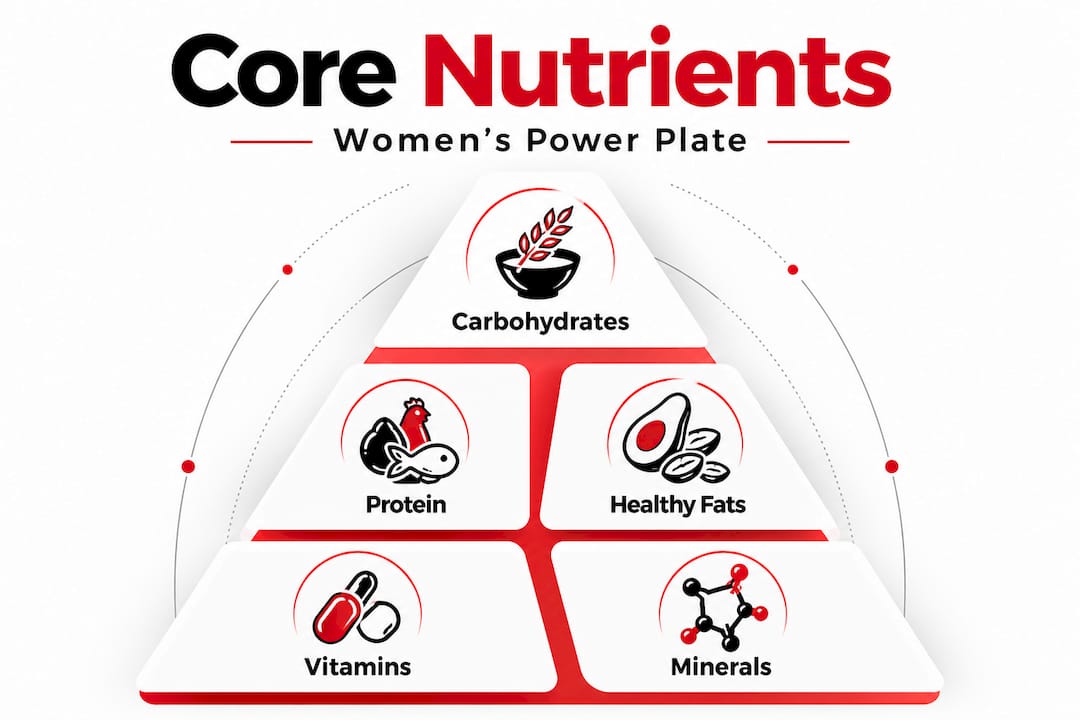
Here is a breakdown of the key nutrients that matter most:
| Nutrient | Function | Food sources | Daily focus |
|---|---|---|---|
| Carbohydrates | Primary fuel for energy and brain function | Oats, sweet potato, fruit, whole grains | Time around activity |
| Protein | Muscle repair, hormone production, satiety | Eggs, Greek yogurt, lean meats, legumes | Spread evenly across meals |
| Hydration | Performance, cognition, temperature regulation | Water, electrolyte drinks, whole fruits | Consistent all day |
| Iron | Oxygen transport, energy metabolism | Red meat, spinach, lentils, fortified cereals | Monitor especially during menstruation |
| Magnesium | Muscle function, sleep, stress response | Dark chocolate (yes, really), nuts, leafy greens | Evening emphasis |
| Omega-3s | Inflammation control, hormonal balance | Fatty fish, flaxseed, walnuts | Regular inclusion |
Your menstrual cycle is not an inconvenience. It is data. During the follicular phase (days 1 to 14), your body handles carbohydrates better and recovers faster. During the luteal phase (days 15 to 28), you may need more calories, especially protein and healthy fats, to manage increased metabolic demand and support mood stability. Aligning your nutrition with these phases is one of the smartest moves you can make.
Low energy availability is a recognized risk for active women and can negatively impact everything from performance to hormonal health. Many women do not even know they are under-fueling because they have been conditioned to eat less, not more. Check out these nutrition essentials for self-care and explore holistic nutrition examples to build a fuller picture of what nourishing your body really looks like.
Steps to assess and maintain healthy energy availability:
- Track your energy input and output for at least one week without judgment.
- Identify patterns where fatigue, mood dips, or cravings spike (this is often cycle-linked).
- Check in on your protein intake specifically. Aim for at least 0.7 to 1.0 grams per pound of body weight.
- Add strategic snacks between meals if you are exercising regularly or have high cognitive demands.
- Consult a registered dietitian if you notice persistent fatigue, irregular cycles, or poor recovery.
Pro Tip: Signs of under-fueling include brain fog, constant hunger, slow recovery, and mood swings. If that sounds familiar, queen, it is time to eat more and eat smarter. Prioritize regular meals and snacks rather than white-knuckling through hunger.
Personalization and periodized fueling: The modern approach
Generic diets are out. Personalized, periodized fueling is it. Here is why the one-size-fits-all approach keeps falling short, and what to do instead.
Periodized nutrition means adjusting your intake to match changing demands across different training or life phases. Think of it like dressing for the weather. You would not wear a puffer coat in July, right? The same logic applies to how you fuel your body. What you need during a high-intensity training week is completely different from what you need during a rest week or a stressful work sprint.
Online macro calculators miss individual differences. Starting with a professional assessment gives you a far more accurate baseline than plugging numbers into an app and hoping it adds up. Your metabolism, lifestyle, stress levels, hormonal health, and goals are unique to you.
Four ways to personalize your nutrition strategy:
- By schedule: A 5 AM workout demands different fueling than a lunchtime yoga session. Adjust pre and post-workout nutrition to match your actual timing.
- By energy demand: High-stress workweeks, travel, and intense training phases all increase caloric and micronutrient needs. Do not stay static.
- By preferences: Hating what you eat is not sustainable. Build your plan around foods you genuinely enjoy so it sticks long-term.
- By cycle phase: As covered above, matching your macros to your hormonal phase is a powerful and underused tool.
Here is something that might surprise you: women have historically been underrepresented in nutrition research, meaning much of the existing guidance was built on male-dominated studies. That is changing, but it means you need to advocate for your own data, your own body, and your own results.
Periodized fueling in real life might look like this: higher carbohydrate days when you train hard, moderate carbohydrate days on rest days, increased protein focus post-workout, and strategic fat inclusion in the evening to support hormonal function and sleep quality. It is not complicated once you understand the logic.
For tailored guidance on personalized supplement approaches, check out our full breakdown. Because supplements, when chosen correctly, can fill real gaps in a periodized plan without replacing the power of whole foods.
Pro Tip: Schedule a quarterly nutrition check-in, either with yourself or a professional. Life changes. Seasons change. Your body changes. Your fueling strategy should evolve right along with you.
Beyond the basics: Key nuances and pitfalls
Okay, you have got the fundamentals and the advanced moves. Now let’s talk about the sneaky stuff. The overlooked factors and avoidable mistakes that quietly sabotage your results even when you are doing everything else right.
Overlooked factors that can hold you back:
- Hydration depth: It is not just about drinking water. Electrolyte balance matters especially around exercise, during your luteal phase, and in hot conditions. Plain water alone will not cut it if you are sweating hard or highly stressed.
- Micronutrient gaps: Iron deficiency is wildly common in active women and directly impacts energy and endurance. Vitamin D, B12, and zinc are also frequently overlooked. Get your levels checked before you assume a supplement is unnecessary.
- Rest and active recovery: Nutrition cannot outwork poor recovery. Your muscles rebuild during sleep, not during the workout itself.
- Nervous system regulation: Chronic stress elevates cortisol, which increases nutritional demands and alters how your body metabolizes carbohydrates and protein. Managing stress is a nutrition strategy.
Sleep is not just a wellness bonus. It is a genuine performance outcome. Protein and fat intake patterns can directly influence sleep quality markers in women. Evening nutrition choices matter more than most people realize.
“Optimizing evening macronutrient balance may support sleep and performance.”
That means swapping the 9 PM sugar binge for a balanced snack with protein and healthy fat could literally change how you feel the next morning. Try Greek yogurt with walnuts, or a small portion of cottage cheese with berries. Simple, effective, and genuinely satisfying.
A major pitfall? Copying elite athlete routines wholesale without adjusting for your actual life. That elite marathoner’s 4,000 calorie fueling protocol was designed for her training load, not for your Tuesday. Take the principles, leave the extremes. Your body deserves a strategy, not a copy-paste job.
Explore curated wellness essentials for women to find tools and resources that support every layer of your high-performance lifestyle, from nutrition to recovery and beyond.
The empowered woman’s approach to high-performance nutrition
Here is the real talk, the perspective that the nutrition world rarely says out loud.
Performance is personal. Your version of high performance might mean finally having consistent energy through a full workday without crashing. It might mean recovering faster from weekend hikes, feeling less anxious during your cycle, or simply showing up as your sharpest, most vibrant self every day. None of those goals are less valid than crossing a finish line.
The fitness and nutrition industry has spent decades gatekeeping this knowledge inside athlete-only spaces and then selling oversimplified versions of it to women in the form of diet culture and restriction. That narrative is tired, babe, and we are not buying it.
Wellness-focused women can absolutely adapt athletic nutrition strategies in a way that is sustainable, joyful, and deeply personal. The key is treating science as a tool, not a rulebook. You are the expert of your body. No algorithm, no calculator, and no influencer knows your lived experience the way you do.
“You are the expert of your body. Strategy is a tool, not a rulebook.”
What we encourage at Rich Fit Bitch is building your nutrition strategy the same way you build your life: intentionally, unapologetically, and with the freedom to evolve. This is not about perfection. It is about alignment. When your food choices align with your goals, your cycle, your schedule, and your pleasure, that is high performance in action.
Check out our wellness rituals for women for a broader look at how nutrition fits into a full, empowered wellness practice. Because food is just one piece of the beautiful, powerful whole that is you.
Take the next step with expert tools and community support
Ready to level up? You now have the knowledge. It is time to put it into practice with the right tools and the right crew behind you.
At Rich Fit Bitch, we have built a community of women who refuse to settle for ordinary. Our curated nutrition essentials are selected specifically for high-performing women who want quality ingredients, not filler. Our specialty supplements are designed to fill real gaps in your personalized plan, whether that means hormonal support, recovery optimization, or energy sustainment. This is not a one-size-fits-all vitamin aisle. It is a curated, elevated toolkit for women who take their wellness seriously and still know how to have fun doing it. Come for the products, stay for the community. The vibe is everything.
Frequently asked questions
Is high-performance nutrition only for competitive athletes?
No. The ideal athlete diet is not very different from a healthy diet recommended for all people, meaning these principles optimize energy, recovery, and wellness for anyone willing to apply them.
How can women personalize high-performance nutrition plans?
Start by assessing your unique energy needs, menstrual cycle effects, and physical activity level. Personalized plans are more effective than generic calculators, especially given how significantly women’s needs vary.
What is low energy availability and why does it matter?
Low energy availability means not eating enough to meet your body’s actual needs. Low energy availability may have adverse effects on performance, injury risk, and long-term hormonal health.
Does meal timing impact results for women?
Yes, absolutely. Nutrient timing and consideration of hormonal fluctuations are important aspects of women’s high-performance nutrition, supporting better energy and recovery throughout the cycle.
What role does sleep play in high-performance nutrition?
Sleep is a performance outcome, not a luxury. Higher protein and balanced macronutrients correlate with better sleep quality for women, making your evening food choices a genuine part of your performance strategy.
Recommended
- Elevated nutrition: what it means for holistic wellness – RICH FIT BITCH
- Top wellness supplements for women: Boost holistic health – RICH FIT BITCH
- Why Nutrition Matters: Empower Your Well-Being – RICH FIT BITCH
- Elevated essentials: Upgrade your everyday wellness routine – RICH FIT BITCH
- Build a skin nourishment routine for lasting glow – Body Face Scalp®