

Supplements for women's fitness: what actually works
The supplement aisle is overwhelming, babe. Hundreds of products, bold claims, and zero clarity on what your body actually needs. Here’s the thing: not all supplements are created equal, and most women are either over-buying or missing the ones that genuinely move the needle. Protein, vitamin D, and caffeine have real, researched impacts for active women, but only when used wisely. This guide cuts through the noise. We’re breaking down the science, the smart picks, the red flags, and how to build a personalized routine that actually supports your goals. No fluff. No gimmicks. Just evidence and main character energy.
Key Takeaways
| Point | Details |
|---|---|
| Evidence trumps hype | Science shows key supplements like protein and vitamin D make a real difference for active women. |
| Personalize for best results | Your supplement needs depend on your goals, tests, and body—not trends or generic lists. |
| Food comes first | Prioritize a nutritious diet and use supplements only to fill true gaps confirmed by research or testing. |
| Monitor and adjust | Track changes, reassess every few months, and adjust your supplement routine as your health evolves. |
Why supplements matter in women’s fitness
Let’s get real. Women ages 25 to 45 are dealing with a unique cocktail of hormonal shifts, muscle maintenance challenges, and lifestyle stress that men simply don’t face in the same way. Your body is doing a lot, queen. And sometimes, even the cleanest diet leaves gaps.
The myth that “fit women only need whole foods” sounds great in theory. In practice? Not always true. Hormonal fluctuations affect nutrient absorption. High training loads increase demand for protein and micronutrients. Stress depletes magnesium. Life happens. Understanding why nutrition matters is the first step to making smarter choices.
Here’s why active women in this age group often turn to supplements:
- Increasing lean muscle: Protein synthesis slows as we age, making adequate protein intake non-negotiable.
- Protecting bone health: Vitamin D deficiency is common in women athletes and directly linked to reduced bone density and injury risk.
- Enhancing recovery and performance: Targeted nutrients speed up repair after tough sessions.
- Addressing diet or absorption limitations: Vegans, dairy-free queens, and women with gut issues often miss key nutrients from food alone.
“Supplements like protein and vitamin D address common deficiencies and performance gaps in women, especially when training demands are high.”
Exploring top wellness supplements can help you identify where your own gaps might be hiding.
Pro Tip: Before adding anything new to your routine, get your blood work done. Testing for deficiencies first saves you money and ensures every supplement you take is actually doing something for your body.
What the research really says: Evidence-based supplement picks
Okay, let’s talk numbers. Because the science is actually fascinating when you break it down for real women with real fitness goals.

Multi-ingredient protein supplementation increases muscle strength with an effect size of Hedges’ g = 0.50, which is considered a moderate and meaningful improvement. That’s not a small deal. And caffeine at 3 to 6 mg per kg of body weight consistently boosts endurance, power output, and overall athletic performance in women. These aren’t trends. They’re data.
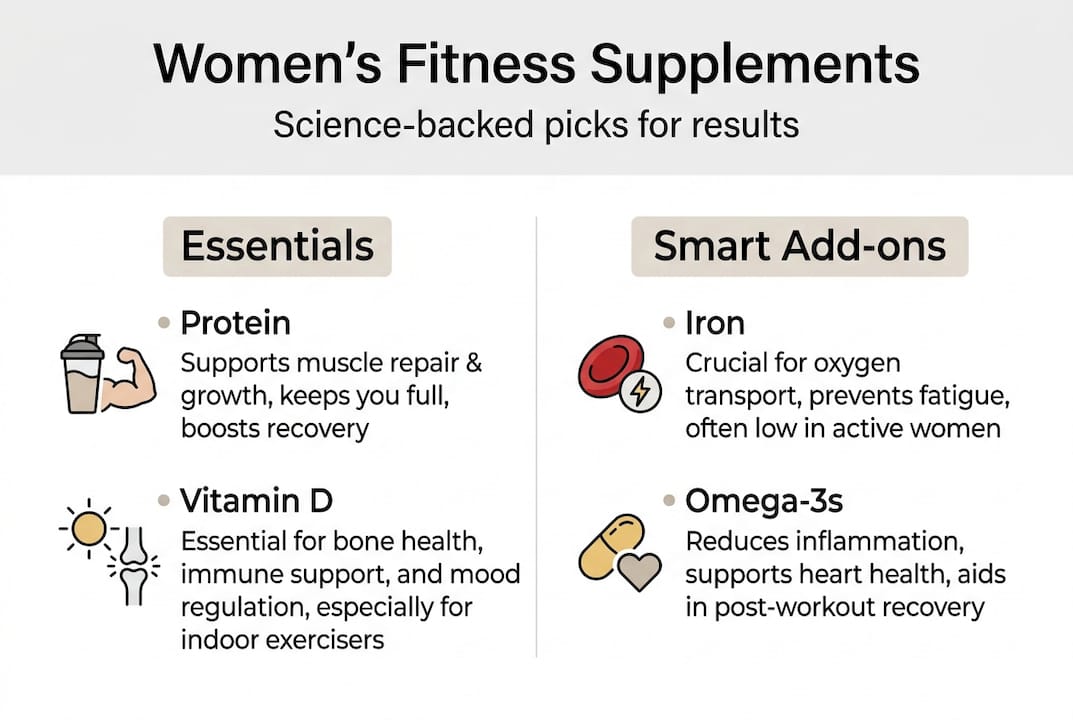
Here’s a quick snapshot of the top evidence-backed picks:
| Supplement | Who benefits most | Key outcome | Caution |
|---|---|---|---|
| Protein (whey/pea) | All active women | Muscle strength, lean mass | Excess can stress kidneys |
| Vitamin D3 | Women with low sun exposure | Bone health, immune function | Test levels first |
| Caffeine | Endurance and strength athletes | Power, performance, focus | Timing and tolerance vary |
| Beta-alanine | High-intensity athletes | Reduced fatigue, endurance | Sport and dose specific |
| Probiotics | Women with gut or immune issues | Gut health, recovery | Strain matters |
How to actually interpret supplement research like a boss:
- Check the dose. A study using 20g of protein daily isn’t the same as a scoop of whatever’s on sale.
- Look at the duration. Short-term studies don’t always predict long-term results.
- Note the population. Was the study done on women your age, or on college-aged male athletes?
- Watch for individual differences. Older women and those with higher BMI often see greater benefits from protein and vitamin D.
- Assess the form. D3 outperforms D2. Creatine monohydrate beats fancy blends every time.
Explore energy-boosting supplements if caffeine and performance are your focus. Just remember: not every supplement supports fitness, and underdosing or poor timing can make even the best product useless.
Food first, then smart supplementation
Here’s the framework we live by: food is your foundation, supplements are your finishing touch. Not the other way around.
Leafy greens, quality protein sources, dairy or fortified alternatives, and colorful whole foods cover the majority of your nutritional bases. Experts recommend prioritizing food sources first, then layering in whey or pea protein, creatine, and vitamin D3 only where genuine gaps exist. That’s the smart, holistic approach.
Here’s how whole foods and supplements stack up:
| Whole foods | Supplements | |
|---|---|---|
| Bioavailability | High, naturally paired with cofactors | Varies by form and brand |
| Cost | Moderate, accessible | Can be expensive |
| Convenience | Requires prep and planning | Quick and portable |
| Best timing | Every meal, every day | Around workouts or as directed |
| Limitations | Volume needed for high demands | Not a substitute for real food |
Signs you might actually need supplementation:
- Testing confirms a deficiency (vitamin D, iron, B12)
- Your training intensity has increased significantly
- Your diet restricts whole food groups (vegan, dairy-free, gluten-free)
- You’re recovering from injury or illness
- Your energy or performance has noticeably dropped
Learn more about choosing the right supplements and pair that with solid nutrition essentials for self-care to build a routine that actually holds up long-term.
Pro Tip: If your supplement label doesn’t specify vitamin D3 (not just “vitamin D”) or clearly list protein sources, put it back on the shelf. Label transparency is a non-negotiable for quality. And please, no mega-dosing. More is not always more, babe.
Personalizing your supplement approach for real results
Copying your friend’s supplement stack? Cute idea. Rarely works. Your body is not her body. Your hormones, your training style, your gut health, your stress levels. All different. All matter.
Supplement effects are highly individualized, and the fact that women are still underrepresented in sports nutrition trials means self-monitoring is genuinely essential. You have to be your own data point, queen.
Here’s how to build a supplement plan that actually fits you:
- Get baseline testing. Blood work reveals deficiencies, hormone levels, and absorption issues before you spend a dime on supplements.
- Identify your fitness priorities. Muscle gain, endurance, recovery, bone health? Your goal shapes your stack.
- Choose evidence-based options. Stick to supplements with real research behind them, not influencer hype.
- Log your diet and exercise changes. You can’t know if something is working if you’re changing five things at once.
- Check for side effects and results. Give each supplement 6 to 8 weeks, then honestly evaluate.
Tracking methods that actually work:
- A food diary (even a simple notes app works)
- An energy journal to track mood, focus, and workout quality
- A fitness app to monitor performance trends over time
Building sustainable wellness strategies means treating your supplement routine as a living, evolving plan, not a set-it-and-forget-it situation.
Pro Tip: Reassess your supplements every 3 to 6 months. Your needs shift as your fitness level, hormones, and lifestyle evolve. What worked at the start of your journey might not be what your body needs six months in.
Our take: Why smart supplement use empowers holistic wellness
Here’s our honest, zero-fucks take: the supplement industry loves to make you feel like you need everything on the shelf. You don’t. And that pressure to buy more, stack more, and optimize more is exhausting.
Conventional wisdom treats supplements like a must-have checklist. But real results come from persistent, tailored effort built around foundational health. We’ve seen it over and over. Women who simplify, test, and tune their approach outperform those chasing every new trend.
“Less can be more, especially in supplementation. When the plan fits your body and goals, progress is natural and sustainable.”
Trust your health data. Listen to your body. Seek professional input when something feels off. And explore wellness essentials for holistic health that are rooted in real evidence, not marketing magic. Your wellness journey is yours. Own it unapologetically.
Curate your supplement routine with our expert picks
Ready to build a routine that actually works for your body and goals? At Rich Fit Bitch, we curate elevated, research-backed essentials so you’re never guessing. Browse our specialty supplement collection for targeted options that align with your fitness priorities. Need foundational support? Our top vitamins and minerals collection covers the science-supported basics every active woman should consider. Start with what your body actually needs, layer in smart additions over time, and use our blog resources to keep refining your approach. This is your glow-up, babe. We’re just here to make it a little more elevated.
Frequently asked questions
Should I take supplements if I already eat healthy whole foods?
Even with a balanced diet, supplements like vitamin D or protein can address gaps caused by lifestyle, activity level, or absorption issues. Protein and vitamin D can benefit women even with good diets, especially under high training demands.
Which supplement boosts workout results fastest?
Research supports protein supplements and caffeine as the most effective for immediate muscle strength and endurance gains. Protein and caffeine consistently improve performance across multiple studies on active women.
Are supplements safe for long-term use?
Most supplements are safe when used as directed, but individualized dosing and routine reassessments every few months are key to keeping your routine both safe and effective.
How do I know if I need a supplement?
Get your nutrient levels tested and factor in your training load, diet patterns, and any professional guidance before starting. Testing first is the smartest move before spending money on anything new.
Do women need different supplements than men for fitness?
Some supplements work for both, but women’s hormone cycles and nutrient needs mean dose and timing can differ significantly. Efficacy depends on timing, hormonal phase, and individual response in women specifically.