

Why supplement quality matters for your health and wellness
You grab a supplement off the shelf, toss it in your cart, and assume you’re doing something great for your body. Same as the next babe, right? Wrong. Not all supplements are created equal, and the difference between a high-quality product and a low-quality one can be the difference between genuinely leveling up your wellness and accidentally putting something harmful in your body. The supplement industry is largely unregulated in ways most people don’t realize, and for women who are serious about their health, beauty routines, and overall glow-up, understanding what supplement quality actually means is non-negotiable. Let’s break it all the way down.
Key Takeaways
| Point | Details |
|---|---|
| Supplement quality protects you | Supplements with strong quality protocols help prevent contamination and false labeling. |
| Third-party testing matters | Look for verification marks from organizations like NSF or USP for added safety in supplement choices. |
| Risks go beyond the label | Low-quality supplements can hide risks like heavy metals, undeclared drugs, or instability. |
| Empowerment through information | Being informed gives you confidence to make safer choices and to support others seeking wellness. |
What does supplement quality really mean?
Okay, queen, let’s start with the basics because “quality” gets thrown around like confetti with no real context. When we talk about supplement quality, we’re talking about something very specific, backed by federal regulatory standards.
The FDA’s dietary supplement cGMP framework is the backbone of quality control in this industry. cGMP stands for Current Good Manufacturing Practices, and these rules are designed to ensure that every supplement you take consistently meets specifications for identity, purity, strength, and composition, and is manufactured, packaged, and held in ways that prevent adulteration. In plain terms? What’s on the label should actually be in the bottle, in the right amount, without dangerous extras.
“Quality systems are designed to ensure finished dietary supplements consistently meet specifications for identity, purity, strength, and composition, and are manufactured, packaged, and held to prevent adulteration.” — FDA, 21 CFR Part 111
But here’s the part most people miss. Unlike prescription medications, supplements do not go through a pre-market approval process. No one from the FDA reviews and signs off on a supplement before it hits the shelves. Brands self-regulate, and enforcement only happens after something goes wrong. That’s a big deal. It means the responsibility of quality falls heavily on manufacturers, and heavily on you to know what you’re buying.
Packaging and labeling controls specifically exist to reduce batch-to-batch variability, prevent wrong-label situations, and guard against contamination during the filling and packaging process. These controls matter because even well-intentioned brands can have inconsistent production if protocols aren’t airtight.
Here’s a quick breakdown of what “quality” actually covers:
| Quality attribute | What it means | What it protects against |
|---|---|---|
| Identity | The right ingredients are present | Substitution or fraud |
| Purity | Free of unwanted substances | Heavy metals, contaminants |
| Strength | Correct potency/dose | Underdosing or overdosing |
| Composition | Ingredients in proper proportions | Imbalanced formulas |
| Contaminants | No harmful extras | Bacteria, toxins, adulterants |
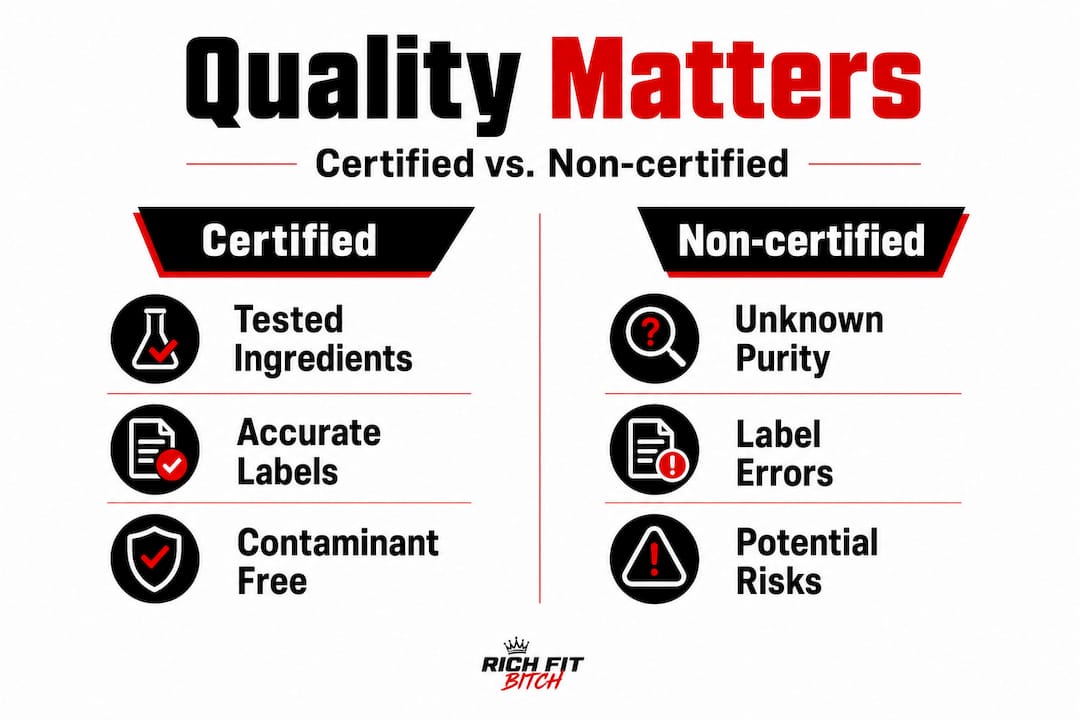
When you’re choosing supplements for women’s wellness, this framework is your starting point. Quality is not just a vibe word, it’s a measurable, regulated standard that many products still fall short of.
Real-world risks: What happens when supplement quality fails
Now let’s get into the part that nobody wants to talk about but absolutely needs to. When supplement quality fails, real people get hurt. And women face some of the highest risks, especially during pregnancy, breastfeeding, or when managing chronic health conditions.

Consumer Reports testing has found serious quality gaps in widely available supplements, including heavy metal contamination in protein powders and rancidity issues in fish oil products. These aren’t fringe brands, either. They’re products sitting on shelves at stores you shop at regularly.
Here’s where it gets more alarming. An academic analysis of heavy metal contamination in dietary supplements shows that contamination risks are well-documented across product categories, reinforcing why ingredient sourcing and manufacturing quality control matter so much, even when the immediate health effects seem uncertain.
Over two-thirds of tested protein powders exceeded safe lead levels in independent testing. That’s not a small statistic. That’s the majority.
For women who are pregnant, breastfeeding, managing chronic conditions, or taking medications, the FDA consumer alert on tainted supplements is clear: low-quality supplements increase unintended exposure risk and can worsen interactions or adverse effects. The margin for error is much smaller when your body is already navigating hormonal shifts, medication schedules, or the demands of growing another human.
Common risks to watch for include:
- Mislabeling: What you see is not what you get. Ingredients listed inaccurately.
- Underdosing: You’re paying for a dose that won’t actually do anything.
- Hidden adulterants: Unlisted substances, sometimes prescription drugs, added without disclosure.
- Heavy metal contamination: Lead, arsenic, cadmium, mercury found in tested products.
- Rancidity: Especially in omega-3s and fat-soluble vitamins, leading to oxidative stress instead of benefits.
| Feature | Certified supplement | Non-certified supplement |
|---|---|---|
| Label accuracy | High (third-party verified) | Variable, often unverified |
| Contaminant screening | Yes, documented | Rarely, if ever |
| Batch consistency | Controlled, monitored | Inconsistent |
| User safety profile | Significantly stronger | Higher risk, especially for vulnerable groups |
Understanding supplements and women’s fitness is about more than picking the prettiest label. It’s about knowing that what you’re putting into your body is actually what it claims to be. The same goes for energy supplements for women: energy blends are especially prone to proprietary formulas that obscure real ingredient quantities.
Pro Tip: The most important step is to stop letting marketing do the thinking for you. A sleek label and an influencer co-sign are not scientific or regulatory validation. Keep scrolling for what actually matters.
How to spot high-quality supplements and minimize risk
Okay, here’s the part where we boss up and take control. You now know the risks. Now let’s talk about how to protect yourself and make smarter, more empowered choices.
The single biggest tool in your toolkit? Third-party certification. Because supplements are not approved like prescription drugs, third-party verification adds a critical layer of assurance around label accuracy and contaminant testing. NSF and USP are two of the most recognized names, and their seals on a product mean someone outside the company has verified quality claims.
Here’s a step-by-step process to evaluate any supplement before you buy:
-
Look for third-party certification marks. NSF, USP, or Informed Sport seals signal that a product has gone through independent quality verification. These marks are not free to obtain, which means brands that carry them are investing in accountability.
-
Read the label like your wellness depends on it. Because it does, babe. Check for specific ingredient amounts (not just a “proprietary blend”), the country of origin for key ingredients, and any allergen disclosures.
-
Search for batch testing information. High-quality brands provide certificates of analysis (COAs) for individual batches. This tells you the actual tested results for that specific production run, including contaminant levels and potency.
-
Check the brand’s recall history. The FDA maintains a public database. Brands with a pattern of recalls or warnings should be a hard pass. You can search by brand name and product type.
-
Research the manufacturer, not just the brand. Many supplement brands don’t make their own products. They use third-party contract manufacturers. If a brand is vague about who makes their product, that’s a yellow flag.
-
Talk to a healthcare provider who understands your specific goals. Especially if you’re pregnant, taking medications, or managing a condition, a provider can help you assess what’s appropriate and safe for your unique situation.
Top wellness supplements for empowered women are the ones built on transparency. And when you pair that with holistic nutrition inspiration, you’re creating a wellness foundation that actually holds up.
Pro Tip: Certification logos are powerful signals but not a promise that a supplement is effective for your unique needs. Quality and efficacy are two different conversations. Verify both before committing.
Quality, empowerment, and community: Why it really matters for women
Let’s zoom out for a second because this is bigger than just you and your supplement shelf. When women demand quality, the entire industry has to rise. That’s main character energy on a collective level.
Here’s the real talk: for women, supplement quality connects directly to empowerment. Making informed choices means you’re not just along for the marketing ride. You’re actively protecting your health, your energy, your hormones, and your future self. And when you share that knowledge with your squad, your community elevates too.
The FDA’s cGMP quality systems benefit the community by ensuring consistent identity, purity, and composition. This reduces exposure risk across entire groups, especially those most vulnerable like pregnant women, those managing autoimmune conditions, or women navigating major hormonal shifts.
Quality is a community safeguard. When standards are upheld, everyone benefits, not just the individual consumer.
Here are the tangible empowerment benefits that come with choosing quality:
- Confidence in your choices: No second-guessing what you put in your body. You did the research, queen.
- Reduced personal risk: Lower exposure to contaminants, adulterants, and mislabeled doses.
- Better collective outcomes: Communities of informed supplement shoppers push brands to maintain higher standards.
- Stronger advocacy: When you know what quality looks like, you can advocate for it in your circles, your social feed, and your community spaces.
- Financial wisdom: Spending money on a product that actually delivers what it promises is a form of financial wellness too. No more flushing dollars down the drain on underdosed supplements.
Explore wellness essentials for women with this framework in mind. And if you want to understand the deeper connection between supplement choices and your total wellness picture, empowering women through wellness is the energy we’re all about.
Our take: The uncomfortable truth about supplement quality nobody talks about
Let’s have an honest moment, because that’s what we do here at Rich Fit Bitch.
Most women stop at the certification logo. They spot the NSF seal, feel a wave of relief, and put the product in their cart. Done. But that’s only half the story, and the other half is what separates truly empowered wellness shoppers from everyone else.
Certification is a baseline, not a finish line. It tells you a product was made correctly. It does not tell you the ingredient is effective for your specific goals, that the dose is optimized for your body, or that the formula is the best available option. That requires you to go deeper.
Here’s the uncomfortable truth: the supplement industry is built on the gap between what consumers assume and what’s actually being delivered. Marketing budgets are enormous. Scientific literacy among shoppers is lower than brands would like you to believe. And the combination creates perfect conditions for mediocre products to thrive.
Your wellness journey is powered by asking questions nobody else is asking. Why is this ingredient included? What does the research actually say about this dose? Who manufactured this, and can I verify their standards independently? That’s what elevated nutrition really means: not just eating or supplementing well, but understanding why every choice matters.
Wellness is also a collective journey. The standards your community holds today shape what brands produce tomorrow. When a critical mass of women demand better, brands respond. We’ve seen it happen in the food industry with clean labels, in the beauty industry with ingredient transparency, and it’s happening slowly but surely in supplements too. Your informed purchase is a vote for higher standards across the board.
Pro Tip: Stay curious and a little skeptical. Be an advocate for quality in your circles. Share what you know. Use your influence, whether that’s with your sister, your group chat, or your Instagram story, to push the conversation toward what actually matters.
Ready to upgrade your wellness with supplements you can trust?
You came here with questions and you’re leaving with a whole new filter for how to shop smart. Now let’s put that knowledge to work. At Rich Fit Bitch, every product in our curated collection is chosen with your health, your confidence, and your goals in mind. We’re not here for filler, fluff, or anything that doesn’t earn its place in your routine. Browse our specialty supplements for targeted support, explore nutrition essentials built around what your body actually needs, or explore our full wellness collection to find your next glow-up essential. Have questions? Drop them in the community. We’re all in this together, and around here, we only settle for the best.
Frequently asked questions
How can I quickly check if my supplement is high quality?
Look for third-party certification marks like NSF or USP, which provide assurance around label accuracy and contaminant testing, then review labels for specific identity, purity, and testing disclosures.
Are supplements regulated as strictly as prescription medicines?
No. Supplements follow food-level cGMP regulations without the pre-market approval process required of drugs, which means quality variability and enforcement gaps are real and persistent.
What are the biggest risks with low-quality supplements for women?
The biggest risks include contamination with heavy metals or hidden drugs, mislabeling, underdosing, and unexpected interactions, all of which are especially dangerous during pregnancy or when managing chronic health conditions.
Does certification mean a supplement works for my goals?
No. Third-party certification verifies manufacturing quality, label accuracy, and contaminant screening, but it does not prove clinical effectiveness for your individual needs. You still need to assess the ingredient evidence separately.